内容简介
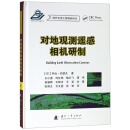
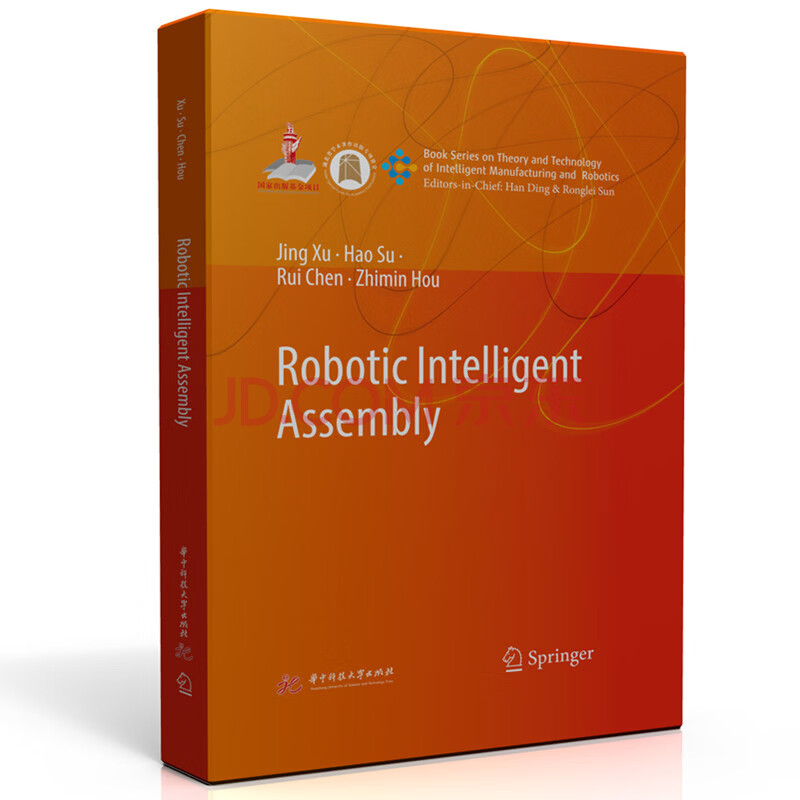
This book explores peg-in-hole assembly strategies to study robotic intelligent assembly. It presents several state-of-the-art principles for peg-in-hole assembly strategies, supported by experimental evidence. In pursuit of theoretical innovation, the author summarizes their research on robotic intelligent assembly over the past decade, highlighting the limitations of model-based algorithms in complex assembly environments and the importance of data efficiency for learning-based algorithms. Each algorithm is supported by extensive experimentation and results demonstrating
its effectiveness. A review of research ideas provides readers with a comprehensive understanding of the progress made in this field. This monograph is intended for undergraduate and postgraduate students interested in robotic intelligent assembly, researchers studying robotic intelligent assembly algorithms, and electronic,mechanical, and computer engineers engaged in industrial robot-assisted assembly.
目录
1 Introduction 1
2 Multi-View Stereo Sensing Method 31
3 General-Purpose Sim2Real Protocol for Marker-Based Visuotactile
Sensing 55
4 Model-Based Strategies: Screw Insertion for Single PiH Assembly 85
5 Model-Based Strategies: Jamming Analysis for Dual PiH Assembly 109
6 LFD for Hard-Measuring Easy-Deformation PiH Assembly 125
7 LFE: Model-Free RL Method for PiH Assembly .143
8 LFE: Model-Based RL for PiH Assembly 159
9 LFE: Hierarchical RL Method for PiH Assembly 185
10 LFE: Hierarchical Compliance Control for PiH Assembly 207
11 Concluding Remarks 233